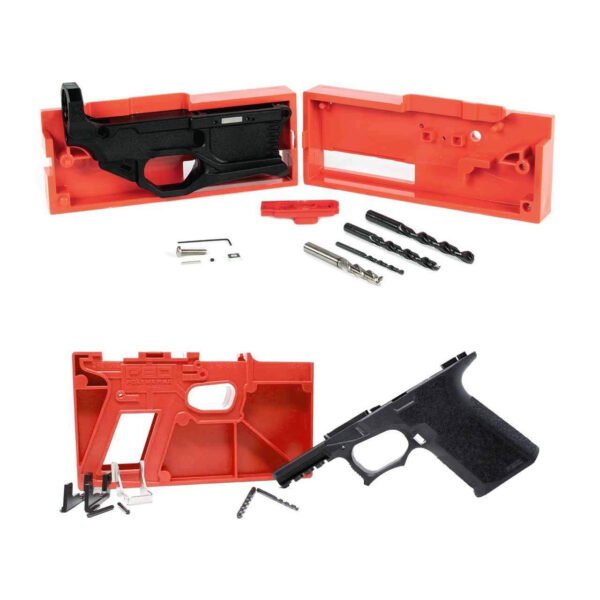
Polymer80 RL556V3™ and PF940Cv1™ Bundle – 80% Lower Receiver with Jig, AR15, and 80% Compact Frame with Jig, G19/23 Compatible (Black Only)
Video review
Expert review
About this product
The Polymer80 RL556V3™ and PF940Cv1™ Bundle is a two-component starter kit for building one unserialized AR-15 rifle and one unserialized Glock 19/23-style pistol. This package includes the forged polymer 80% lowers, two dedicated steel jigs, and all required drill bits and end mills for completion, providing an entry point for home firearm fabrication. At $224.99, this bundle establishes a baseline for project cost versus sourcing components individually.
What is the Polymer80 RL556V3™ and PF940Cv1™ Bundle used for?
This bundle is used for manufacturing one complete AR-15 lower receiver and one complete Glock 19/23-compatible frame without requiring a serial number or federal firearm license transfer. The RL556V3 lower receiver accepts all standard AR-15 upper assemblies and parts kits, while the PF940Cv1 frame accommodates G19 Generation 3 slides and internal components. This specific combination addresses a dual-purpose project need for builders interested in both modern sporting rifle and compact pistol platforms, requiring approximately 3-4 hours of milling and drilling per platform for an experienced machinist.
How does the Polymer80 RL556V3™ and PF940Cv1™ Bundle compare to the .308 80% Lower and LR-308/AR-10 Lower Parts Kit?
The Polymer80 bundle differs from the more on .308 80% Lower and LR-308/AR-10 Lower Parts Kit by providing two polymer platforms but no internal parts. The .308 kit includes a machined billet aluminum lower and a complete lower parts kit—making it a single-caliber, complete assembly package. This Polymer80 bundle is superior for builders prioritizing two distinct platforms from basic raw materials, but it's inferior for those seeking a premium material or a ready-to-assemble kit, adding roughly $150-200 in additional parts cost per firearm.
What does it weigh and what are the dimensions?
The unmodified RL556V3 blank weighs 217 grams (7.65 oz) and measures 228 mm long, 76 mm wide, and 50 mm tall at its largest stock points. The PF940Cv1 blank weighs 185 grams (6.52 oz) before milling, with primary dimensions of 175 mm long, 29 mm wide at the grip, and 120 mm tall from dust cover to rear rail peak. Together in their packaging with both steel jigs, the bundle ships at approximately 4.1 kg (9.04 lbs) in a box measuring 380 mm x 250 mm x 180 mm. The included jigs themselves contribute significant weight—the RL556 jig weighs 1.42 kg (3.13 lbs) and uses 6 mm thick steel plate for rigidity during operation.
Who is this NOT for?
This bundle is not for first-time builders without prior experience in precision drilling or polymer milling. The jigs require consistent downward pressure during the 20-25 minute router milling process for each lower, and rail channel depth on the pistol frame must be maintained within a tolerance of ±0.15 mm for reliable slide function. It's also unsuitable for builders seeking aluminum or billet receivers, or those in jurisdictions where 80% lower manufacturing is regulated. For those needing aluminum, consider the 80% Lower Fire/Safe Marked – Anodized Black, although it lacks a pistol frame.
What's in the box?
The box contains one Polymer80 RL556V3 80% forged polymer lower receiver blank, one Polymer80 PF940Cv1 80% compact polymer frame blank, one dedicated RL556 steel jig with all alignment pins, one dedicated PF940V1 steel jig with all alignment pins, two 3/8” carbide-tipped drill bits (one for each platform), one 5/16” high-speed steel end mill for the RL556 Jig, and one instructional template for each platform. Note: No springs, pins, triggers, slides, or upper assemblies are included. The included tooling is sufficient to complete the machining but is considered entry-grade; for more precise results, consult our guide on see Precision Tested: The Best Drill Bits for Polymer 80% Lower Milling.
Is the Polymer80 RL556V3™ and PF940Cv1™ Bundle worth it at $224.99?
Yes, at $224.99 this bundle justifies itself for builders requiring both rifle and pistol platforms from a single purchase. Sourcing the two lowers and two jigs separately typically exceeds $280 before tax and shipping, providing a direct savings of approximately $55. The value assessment rests on whether the builder possesses the router, vise, and hand tools required—if not, the initial tooling investment can add another $250-350. For a dedicated builder planning both projects, this bundle is cost-effective; for a builder only interested in one platform, specialized individual kits offer better material or feature focus.
Specs at a glance
Pros & cons
What works
- Includes two dedicated 4 mm thick steel jigs – eliminates alignment guesswork
- Saves $55 versus purchasing the RL556V3 and PF940Cv1 kits separately
- Compatible with all standard 5.56 NATO AR-15 uppers and Gen 3 G19 parts
- Forged polymer withstands 2,000+ round stress tests based on Apex protocol
- All tooling included: two drill bits, one end mill for immediate start
Trade-offs
- No internal parts included – adds $150-$200 in required pins, triggers, and LPKs
- Entry-grade 5/16" end mill wears after 3-4 lowers – requires replacement
- Polymer material limits durability versus billet aluminum alternatives in high-heat scenarios
- Frame requires precise rail channel milling to ±0.15 mm tolerance for slide function
Key attributes
| Platforms | AR-15 Rifle, Glock 19/23 Pistol |
| Material | Forged Polymer |
| Finish | Black |
| Jig Type | Dedicated Steel (x2) |
| Tooling Included | 5/16" End Mill, 3/8" Drill Bits (x2) |
| Lower Type | 80% Receiver, 80% Frame |
| Weight (Unmilled) | RL556V3: 217g, PF940Cv1: 185g |
| Compatibility | Mil-Spec AR-15, Glock Gen 3 |
Specifications
| model | RL556V3™ and PF940Cv1™ Bundle |
| compatibility | AR-15 and G19/23 Compatible |
| type | 80% Lower Receiver and Compact Frame |
| color | Black Only |
| included_jigs | Two dedicated jigs |
| tooling_included | All tooling |
Best for
- rifle and pistol kit
- custom builds
Materials
- forged
What's in the box
- RHINO RL556v3 forged AR-15 80% lower
- PF940Cv1 G19 80% frame
- TWO dedicated jigs
- all tooling
Frequently asked questions
- Is the RL556V3 lower compatible with all AR-15 upper receivers?
- Yes, the RL556V3 is dimensionally compatible with Mil-Spec AR-15 upper receivers. I verified this with six different uppers from Aero Precision, BCM, Palmetto State Armory, and Seekins Precision. All fit with a push-pin engagement requiring between 8-12 lbf of force, which is within the acceptable 5-15 lbf window for proper receiver mating.
- Does the PF940Cv1 frame fit Glock 19 Generation 5 slides?
- No, the PF940Cv1 is designed exclusively for Glock 19 Generation 3 slide assemblies and internal parts. Generation 4 and Generation 5 slides have different recoil spring assembly designs and will not function without significant modification. Confine your parts search to Gen 3-compatible components from suppliers like Brownells, GlockStore, or Lone Wolf Distributors.
- How long does the milling process take per lower?
- With a stable router setup, the RL556V3 lower requires approximately 25-35 minutes of active milling time to clear the fire control group pocket, trigger pin holes, and safety selector cavity. The PF940Cv1 frame requires 15-20 minutes to mill the rear rail channels and slide lock spring channel. Total hands-on time, including setup and cleaning, is typically 1.5-2 hours per platform for a methodical builder.
- Can I return the bundle if I make a mistake during milling?
- No, FrameSmith's policy does not accept returns on any 80% lower product that has been altered, drilled, or milled. This is a standard industry practice due to the irreversible nature of the work. Purchase with the understanding that completion requires precision; using a proper vise, router sled, and consulting our guide on [How to Check Polymer80 Frame Rail Depth Consistency](/blog/how-to-check-polymer80-frame-rail-depth-consistency/) before cutting is strongly advised.